Showing posts with label what Wred's currently reading. Show all posts

Monday, March 23, 2026

What Wred's Reading: The Fourth Edition Of The Trouser Press Record Guide Edited By Ira A. Robbins


This book dates from 1991 and early that year before Nirvana and alternative music in general started selling millions of records (the Nirvana entry mainly covers Bleach).  As a result, it's a treasure trove of 1980s college radio, filled with fun bands and cool music.  It's mainly punk rock and new wave, but it covers reggae and hip-hop as well, generally anything cool and underground from the mid-1970s, when Trouser Press started as a zine, to the publication date.  Covering 2,500 musical artists, the book is a great resource for music if you're looking for something new (albeit that it's old now if it's in this book) to listen to that is likely pretty good or at least interesting.  One nice thing about having this book in 2026 is that it's a lot easier to hear this music than it would have been back then when one had to track down an obscure and possibly out of print record.  Today, you can find most of this music on the Internet somewhere.  I've been getting rid of most of my books because I was tired of dragging them around with me, but this is one I'll be keeping.  When I can't find anything new worth listening to, I'll dip into it and check out some old band that's new to me.  The book is out of print (though available used and even reasonably priced if you dig a bit), but you can probably find the reviews from it at TrouserPress.Com, and they have all the issues of the magazines that predated the record guides there which is very cool of them.  They still publish books today, though the last record guide like this was a volume back in the 1990s covering that Nirvana/alternative music goldrush.

If you want to hear some music made since 1991 that might have fit into Trouser Press's editorial scope also, then give my latest album a listen or download at your favorite digital music site such as Soundcloud, Spotify, or Bandcamp!  And if you want to read some more, then please read my latest novel

Monday, September 30, 2024

What Wred's Reading: Despite Everything: A Cometbus Anthology By Aaron Cometbus

I used to have a large zine book collection.  I also used to have a large zine collection, but that's another story.  In any case, at some point, I tired of lugging boxes of books I would probably never reread again around and decided just to reread them and dispose of them.  There is not much left of the zine book collection, only a few books.  This is a big one, so my muscles thank me in advance for finally getting it out of my life.  Cometbus is a fun zine, but reading this all in one large chunk gets a bit numbing.  Best taken in shorter doses, Cometbus's stories of punk life are charming.  Some of them even made me laugh out loud.  If even only half of the events are true, Aaron Cometbus, the editor and main writer of the zine, is lucky to have survived some of his crazy exploits.  The book now looks to be out of print, so maybe I can sell it on eBay (say, have you been checking out my eBay listings lately?--if not, then you're just like the rest of the world as eBay appears to be near-comatose, but maybe it's just the economy in general).  I don't know if Aaron is still publishing the zine itself as it's been a few years since I stumbled across a new issue, but it might still pop up again as zines are wont to do.  If so, I'd probably read it.  I just won't hang onto it for 22 years like I did this book.

If you want to read, but you're going to pass on reading about punks dumpster diving, then please read one of my novels.  My new novel, The Front Yard War, isn't out yet, but the previous Wred Fright novel is!  You can read the others also!

Tuesday, January 3, 2023

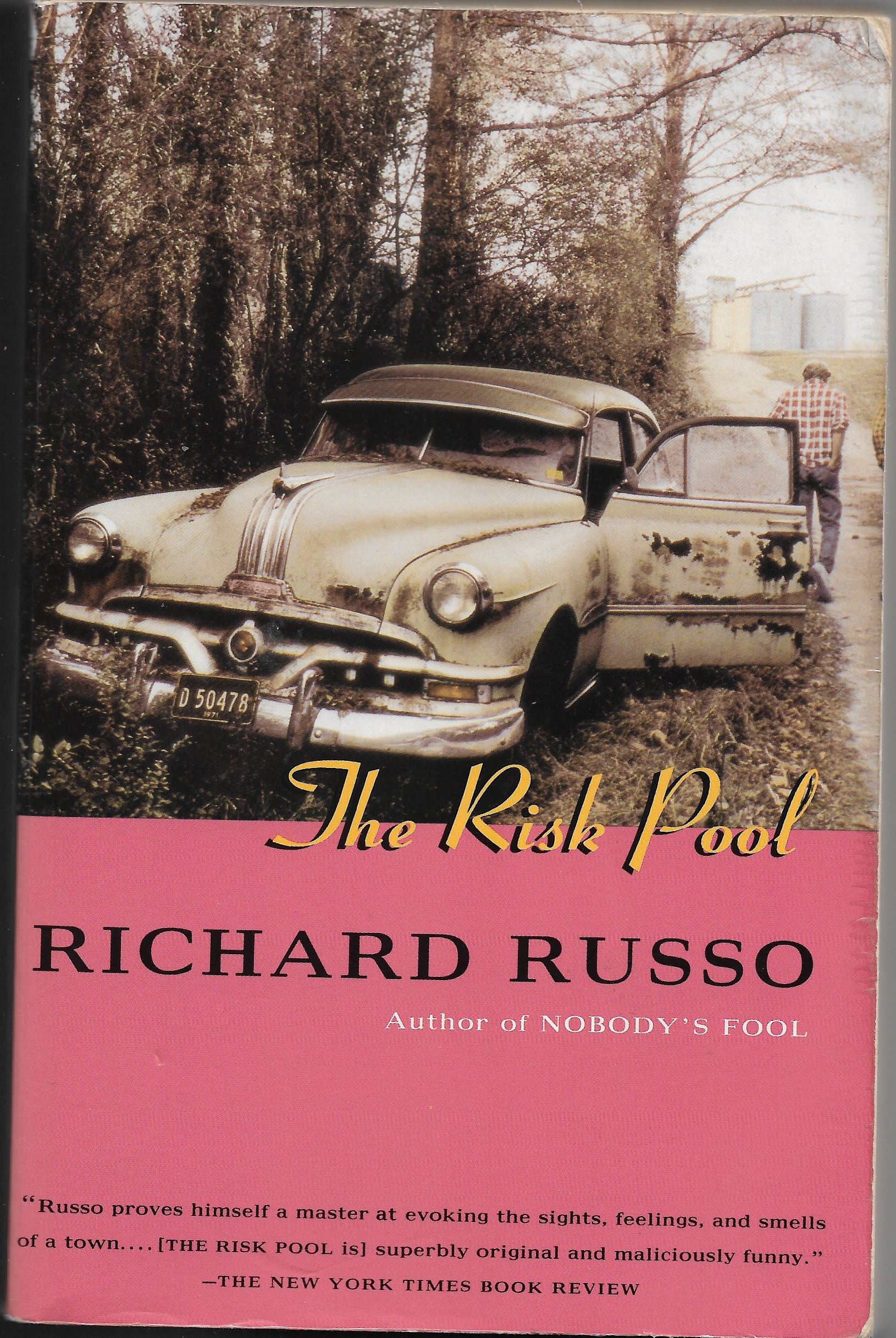
What Wred's Reading: The Risk Pool By Richard Russo

I like to read while I eat sometimes.  Usually, I buy a newspaper or magazine because if I spill ketchup on an article about Donald Trump or The Cleveland Browns, who cares?  It's going in the recycling bin shortly anyway (don't worry, recyclers, I'll try to scrape that ketchup off to make your job easier).  Recently, I couldn't find a decent magazine to read at the few remaining stores who carry magazines, and I was tired of spending $5 for a 3-page newspaper, so I figured I'd just buy a book and rip it up so it laid flat (it's annoying when the books flop over, and I have to use my greasy hands to find my place again).  So I browsed the local Goodwill bookstore to find a book that was interesting and wasn't an expensive first edition anyone would weep over if I ripped it up for easier mealside reading.  Fortunately, Russo's book flips and flops nicely, so it lays flat for the most part, so I haven't had to rip it up, which means it can go to another reader when I'm done.  

That is nice because it's a good book.  Russo's early work is like if Ray Carver wrote novels instead of short stories and skipped all the Gordon Lish editing that gave his work that minimalistic style that made the critics swoon and Carver weep.  Books such as this one, Mohawk, and Nobody's Fool are all nice slice of life stories about life in the rustbelt, with that specific rustbelt being upstate New York USA in the mid to late 20th century.

Russo loses it in his later work.  Presumably, he's mined his youth for all the novelistic possibilities and like many academic writers has little else subject matter to write about (though Straight Man is up there with White Noise for academic satires written by Italian-American straight male writers in the 1980s and 1990s though--admittedly a small demographic).  After Empire Falls, his last good novel, you can skip the rest of his output and not miss much.  Everybody's Fool, the sequel to Nobody's Fool, is particularly dreadful (Russo seems to just smoosh time together in it, aging characters for drama's sake, which considering he writes in a realistic mode, is quite jarring--I forget the exact details, but that's only because I've attempted to blot it from my mind in the same way that some Star Wars fans pretend only the first three movies exist, as in first three released, not the later prequels)--and it looks like Russo's continued to be out of ideas as his next novel is a sequel to that one called Somebody's Fool.

Ugh.

Anyway, don't let his later work scare you off from his earlier work, which is quite good, like a Dickens writing in the 20th Century, just good old-fashioned storytelling.  The Risk Pool, a story about a boy's relationship with his never-do-well father, was the only one of his early books that I never read, so I'm glad to be reading it (I probably got scared away from other Russo books after reading Bridge Of Sighs, another awful later book, or something).

For a book probably not as good as Russo's earlier work but probably better than his later work, please read Fast Guy Slows Down.

Wednesday, March 23, 2022

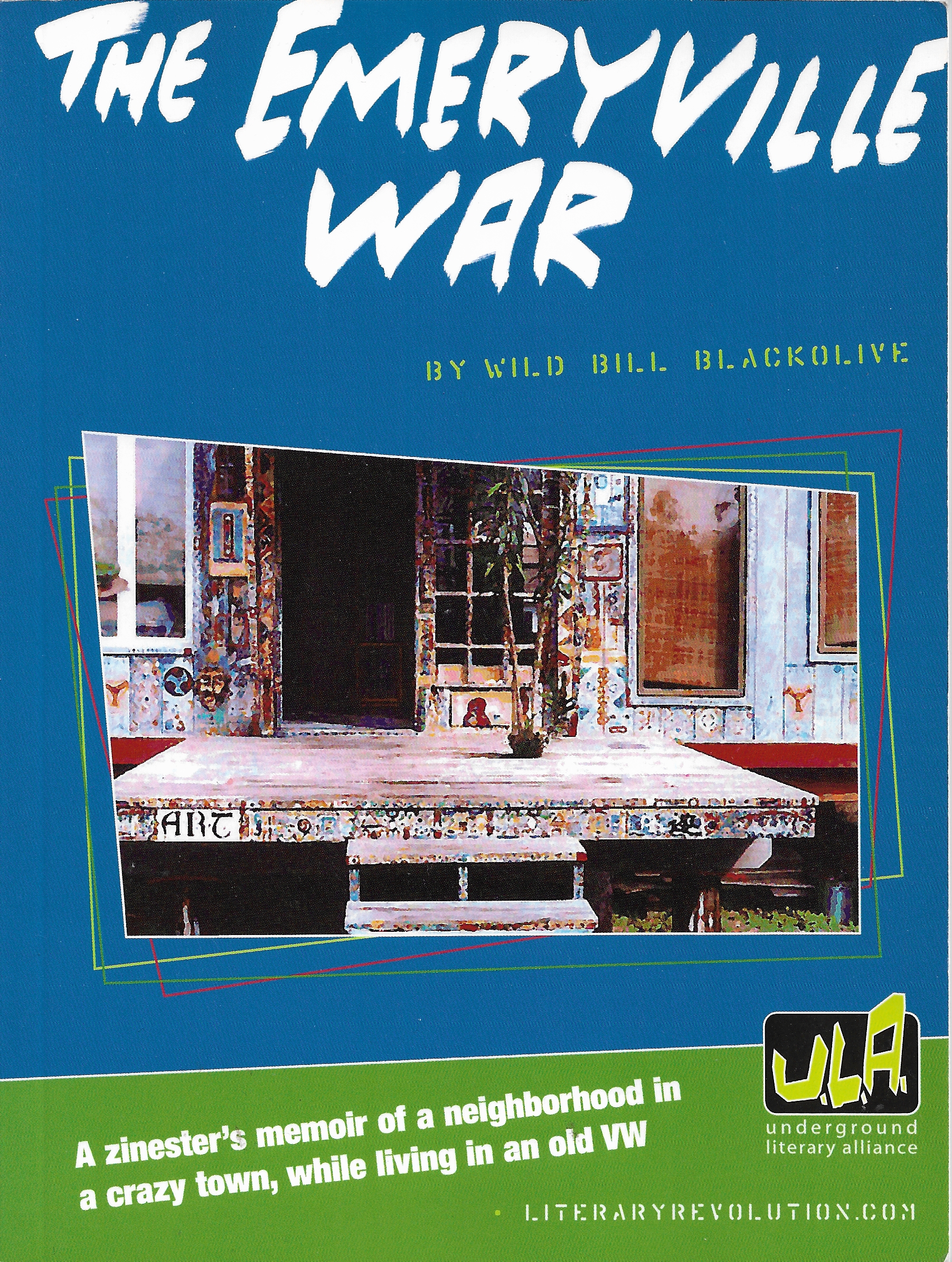
What Wred's Reading: The Emeryville War by Wild Bill Blackolive

So I am still slowly rereading through my personal library and disposing of it.  I noticed that this extraordinary novel has gotten little attention, so I thought I would post about it.  This is one of my favorites of the ULA Press novels that The Pornographic Flabbergasted Emus was published among.  It's autobiographical, so you might not even consider it fiction (in fact, the publisher's hype calls it a memoir and novel).  It's basically a wild man hippie being homeless in the 1980s and raising pit bulls in his car.

There is no traditional obvious plot.  The novel seems to start arbitrarily and seems to end arbitrarily.  But there is a plot.  It's actually an old one.  It's the one about the stranger coming to town (you know, just like The Great Gatsby), but in this case the stranger (the main stranger, as you can argue that there are several strangers coming to town in Gatsby) is telling his own story.  It is the story of the stranger arriving in Emeryville, a city near San Francisco, California USA, having some adventures there, and leaving it.

Wild Bill's style is unique.  It is a rambling, stream of consciousness approach that can at times make James Joyce's Finnegans Wake seem to be written for the sixth grade reading level of a USA Today article in comparison.  Some readers just will not get it, but if you hang in there and treat it like a strange dream you are having it will start making its own innate sense.  You are basically in Wild Bill's head, and he is telling a story to himself.  He assumes you know everything he does even though you don't.  At some point, the style will start clicking if you stay with it, but if you read the first line ("Packy disclaims he tried to fuck Adrianne, or that the reason he tried to fuck Sidney is he had feared I would get her instead.") and start wondering who these characters are, you are doomed.  None of them figure in the rest of the novel (I don't think Adrianne even gets mentioned again).  Just go with it; soon you'll be dodging cops, fighting crackheads on the street, drinking Guinness, lifting weights, helping a neighbor's abused son get his morning coffee, attending city council meetings, living with a mad inventor, trying to get your psychedelic western novel published (on a sidenote, you can skip that one--this novel is way better), writing letters to Social Security explaining that you are genius and therefore cannot work, struggling to feed your dogs who keep getting pregnant, and so on.

This novel is crazy.  If you roll with it, it is great fun to read.  I am enjoying my second trip to Emeryville.  Even though the novel is going for collector prices online, I think you can still score it for $5 postpaid (not a huge seller apparently, which isn't surprising given the unique literary voice it is written in) from the publisher, though I would email first to find out for sure.

If you want to read a book that isn't as weird but still pretty weird, then read Fast Guy Slows Down!

Sunday, January 2, 2022

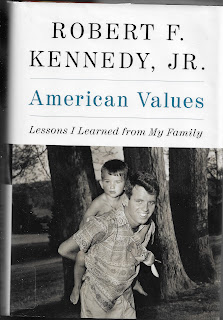
What Wred's Reading: American Values: Lessons I Learned From My Family by Robert F. Kennedy Jr.

This book came out a few years ago, and it's not one I normally would read, but it's been interesting so far.  The reason I am reading it is because I stumbled across a book review of it:  http://edwardcurtin.com/american-values-lessons-i-learned-from-my-family-by-robert-f-kennedy-jr-a-review/.  In it, the reviewer, Edward Curtin, states that the book was boycotted by mainstream reviewers because the book blames the Central Intelligence Agency for the deaths of the Kennedy brothers.

Hmm . . . interesting, for more than one reason.

I'm not sure what the cause is exactly, but the book does seem to have been snubbed by book reviewers, which is odd.  I mean it's not odd when one of my novels get snubbed by mainstream reviewers as book reviews are hard to come by these days in general and since I'm not buying any expensive ads in BookPage or whatnot I'm the last in line to get a book review, but Kennedy Jr's book is published by a major publisher around the 50th anniversary of his father's assassination.  That seems a bit notable.  I did find one article on CBS News (not exactly a review but something):  https://www.cbsnews.com/news/robert-kennedy-junior-reflects-fathers-legacy-assassination-camelot/ and an academic review in The Journal Of American Culturehttps://philpapers.org/rec/MCHAVL-2 (though you probably have to go through an academic library to read the actual review).   The rest of the reviews are by the odd reader who posts a review on his website like this guy:  https://carloseromero.com/book-review-american-values/.

By contrast, media blowhard Chris Matthews also published a book about Kennedy Jr.'s father around the same time and got reviewed all over the place.  This article has some links to them:  https://thebestbiographies.com/2017/12/26/reviews-of-bobby-kennedy-a-raging-spirit-by-chris-matthews/

Strange.

On Kennedy Jr.'s book's webpage (https://www.harpercollins.com/products/american-values-robert-f-kennedy?variant=32205678575650), it lists only two quotes from reviewers and one appears to be from a vanity award website (you know, pay $100 and you get an award) while the other is from Independent Catholic News.

Yeah . . . if that is the best that can be mustered, this book clearly got ignored.

The question is why.  If Curtin is right, it's because the Central Intelligence Agency exerts considerable influence on American media.  That could be the case.  I read an interesting book years ago called The Cultural Cold War:  The CIA And The World Of Arts And Letters by Frances Stonor Saunders, which well-documented how much the CIA tried to influence American literature.  Glenn Greenwald, coincidentally enough, just published an article about how the agency also took the same approach to the rest of the media as well:  https://greenwald.substack.com/p/nbc-news-uses-ex-fbi-official-frank

So in a country where former CIA interns (Still an asset?  Heck, still an employee?) host television New Year's Eve programs, it's not hard to believe that the CIA and their allies in the media might have exerted some influence to obscure Kennedy Jr.'s book.

The other big explanation (so far, the book's good, so I'm not suspecting that the book got ignored because it is bad) is that Kennedy Jr. has taken a political journey that makes mainstream media types nervous.  He started as an environmentalist (I received many fundraising appeals from him for the Natural Resources Defense Council over the years), then I knew him helping out Greg Palast on voting rights issues.  He always seemed like a good dude to me, but at some point, his interest in preventing mercury pollution connected up with folks who were concerned about mercury in vaccines (https://stevekirsch.substack.com/p/how-rfk-jr-went-from-a-good-guy-to) and suddenly the right wing liberty folks were cheering him on more than the traditional liberals were.  From that point, he's been involved in children's health issues and been very skeptical about the benefits of vaccination:  https://childrenshealthdefense.org/about-us/mercury-vaccines-cdcs-worst-nightmare// (and after you read that interview, I bet you'll probably trust him a lot more than the folks trying to discredit him such as this guy:  https://www.mcgill.ca/oss/article/covid-19-health-pseudoscience/anti-vaccine-propaganda-robert-f-kennedy-jr).  Obviously, even back in 2018, being an "anti-vaxxer" made mainstream liberal folks uncomfortable (sample Barnes & Noble customer review of the book:  "He has the blood of the dead Samoan children on his hands."--to understand that comment, read https://www.washingtonpost.com/health/2019/11/26/deadly-measles-outbreak-hits-children-samoa-after-anti-vaccine-fears/) and even a Kennedy wasn't immune to that (note that the book so far has nothing to say about vaccines--it's about his family's history and values), so this could also explain why the book got ignored.

My guess is that it's the former though.  The CIA has always been creepy and over the years they and their fellow intelligence agencies that are essentially wastes of our tax money have just become creepier, so I can find it somewhat plausible that the book's publicity got spiked as a result (if you think that's impossible, then you have a fairy-tale version notion of 20th-Century American history--educate yourself please).  At least, Kennedy Jr. was able to publish the thing and give me a good read.  Since then, he's become even more of a pariah since the antivaxxers have been attacked as public enemies number one during the virus panic since you know Big Pharma, mainstream media, and public health want those dollars and power trips to keep on trucking.  That, of course, just makes me want to read his next book, which is about how much of a creep and moron Anthony Fauci is:  https://www.simonandschuster.com/books/The-Real-Anthony-Fauci/Robert-F-Kennedy/Children-s-Health-Defense/9781510766808

That book seems to have gotten a similar media blackout, but probably for the latter explanation this time.  Nevertheless, it's doing all right for itself (#1 on Amazon right now; by contrast, my highest-ranking book currently is #4,342,908).

If you need another good read after the RFK Jr.'s books, might I suggest Edna's Employment Agency (currently 7,008,622 spots behind the Fauci book).

Tuesday, November 2, 2021

What Wred's Reading: Midcentury by John Dos Passos

I reread the U.S.A. trilogy recently by John Dos Passos and enjoyed it as before.  If you've never read it, it's a sprawling and imaginative slice of modernism about the early 20th Century.  Dos Passos uses a number of techniques that are still a bit jarring to a reader, taking snippets from news reports and advertisements and jumbling them together into a theme that reflects on the previous or next scene featuring one of the fictional characters.  Then he throws in sketches of prominent Americans, usually none too flattering to them.  Dos Passos had a sardonic eye so there's quite a bit of sarcasm and humor underneath the outrage.  He was obviously quite sympathetic to radical politics and often focused on the role class played in America and the corruption that allowed such inequity between rich and poor.  In later life, Dos Passos became disillusioned with communism and turned conservative, so it is interesting to read the little-known sequel to U.S.A.  It's called Midcentury, published in 1961, and he continues to use the same novelistic techniques he used in U.S.A. a quarter-century before.  He's also just as sardonic and sarcastic, delighting in ridiculing American boosterism whether of the space age or the magazine ad.  His beloved Wobblies are long-gone, as is their dream of a better world, and this apparently bugs Dos Passos, so he zeroes in on the hypocrisies of the labor movement, particularly the corruption of union officials who enriched themselves at the expense of the regular worker, exploiting their fellow workers about as well as the employers ever did.  In the chapter I read today, Jimmy Hoffa makes an appearance long before he became famous for mysteriously disappearing.  Midcentury is just as engaging a read as U.S.A. is, but, alas, it is out of print (you can likely score a copy at a library or thrift store, though you may have to dig).  I would love to see what fun Dos Passos would have with America in the age of Donald Trump and Joe Biden, but he died in 1970, so the closest we might come to that is his official website, (run by his grandkid it looks like).

After you read some classic 20th Century American lit, read some 21st Century American lit starting with my latest novel, Edna's Employment Agency.

Sunday, January 17, 2021

Literary Fan Magazine

King Wenclas of New Pop Lit has revived his old print zine Literary Fan Magazine!  I quite enjoyed the original, so I applaud its return.

On a sidenote, I wonder if there will be a return to print now that many Internet companies are censoring content (Wenclas's revival has nothing to do with this by the way as far as I know).  Regardless of the creepiness of the content they are yanking down, freedom of speech as a principle generally is only for speech we don't like since no one has a problem with speech they do like.  The answer to bad speech is good speech as always, not trying to erase the bad speech.  People tend to think bad thoughts whether they feel free to express them or not.  The expression can actually be healthy as the cognition will emerge at some point, probably in a less pleasant manner if it's been repressed for some time.  Conversely, it is wise to pay attention to nasty speech as it is often the precursor to nasty action.  Anyway, I never liked the social networks much.  There was too much garbage on them, and they were creepy in general (I thought this long before I saw the interesting Social Dilemma movie).  I deleted most of my accounts a few years back.  A blog may be so 2003, but it's also a lot more fun.  Since I own my own domain name, even if my webhost took this site down, I would just pop up elsewhere.  Maybe I would even have fun experimenting with running my own server.  As the old line goes, freedom of the press belongs only to one who owns one.

Anyway, back to the King!  He asked me to contribute something, so I wrote a new "What Wred's Reading" for him.  I will let you know when the zine is published (keep in mind that zines publish irregularly, so it might be a while).  It's nice to see the King still publishing.  Many of the other old zinesters have faded away, not publishing in print or online (in some cases, this is a good thing, however).  That makes sense because many zinesters had a particular need to publish and once that need passed, so did the publishing.  Some of us are lifers though.  Fortunately, most are the interesting ones (alas, some are not).  I'm about halfway through my rereading of my Zine World collection and about to the point where I left the staff to concentrate on writing The Pornographic Flabbergasted Emus, and at that time, there was a big debate about online publishing (one bonehead even strangely hijacked a staff meeting, which was basically a zine itself, to complain about the dissertation I wrote that explored how electronic publishing was affecting zines, and it was clear that she nor any of the others she roped in didn't actually read the dissertation).  It is interesting to note that the most strident voices against publishing online then have almost all disappeared from publishing in print or online with only one exception I can think of (but he's been boring readers since 1969 or something).  The people who saw online publishing as yet another interesting tool in the toolbox, even if they took a while to come around to it, such as Wenclas, seem to be more likely still publishing.

In any case, I look forward to the King's new venture!

If you can't wait to read my contribution to the King's zine, then please read my latest novel, Edna's Employment Agency!

Friday, May 8, 2020

What Wred's Reading: Don Quixote

You know a novel is good when it's four centuries old and still makes me laugh out loud.  I've read Don Quixote many times, often because I had to teach it, and it still makes me laugh.  It's baggy, but keep plowing on through and you will soon hit some deadpan or slapstick.  When the characters are vomiting on one another, you know you're reading the classics equivalent of a stupid Hollywood comedy, but it also digs a bit deeper into philosophical issues, which is why it has lasted so long.

This translation is a good one, but I've read a few different ones, and as long as the humor is conveyed I have no deep feelings one way or another about one translation being superior to another.  But this hardcover edition is a nice one.  I bought it at a point when I was trying to get really nice editions of books I liked.  A flooded basement (it's a long story about how the books ended up there) soon cured me of Rare Book Collector Disease, and a few moves since then have caused me to shed most of my belongings because I was tired of lugging so much stuff around (it's a slow process, so I still have many things to shed).  It's an irony that one spends half of one's life acquiring things, and the next half shedding them.  If you're sensible that is, some people hang onto a lifetime's accumulation of stuff, just so their relatives can hurriedly chuck most of it in a dumpster after their death--that's a little too irresponsible for my tastes.  I've had to clean out some dead people's houses; it's a big pain, and work that should be done slowly and joyfully by the owner/collector soon becomes a mindnumbing race to the end by others.  Of course, I've benefited from that as well.  I think I got an awesome reggae cd box set from a dead person's garage sale for $3 (of course, I sent it on its way after I was done enjoying it to another new owner), and I am sure that some dumpster diving treasures came from similar situations.

Anyway, if you think classics are boring, then give DQ a try.  It's a hoot!

If you want to read a newer humorous book, then please read my latest novel!
Friday, April 17, 2020

What Wred's Reading: Fanzines: The DIY Revolution by Teal Triggs

I get cited in this book, so, of course, I like it.  This is yet another reread since all the bookstores and libraries are still closed (there's always mail order, but my ebook reading is currently satisfying my appetite for new material, so for print, it's been the rereading that I was planning on doing anyway).  This book is mainly an exhibit of zine covers.  For that alone, it's a fun read.  It also has chapters that discuss the history of zines.  They tend to be U.K.centric, which makes sense since that's where Triggs lives.  It came out ten years after the mainstream zine book boom, and seeing as those books didn't sell well, I doubt this did either, so it might end up being the last mass market book on zines.  Some scholars will no doubt write about zines in the future, but that'll be probably about it, as the heyday of zines has passed.  This book clearly was intended for the coffeetable, and it does indeed look great.  At one point, it probably was on my coffeetable.  From what I gather online from reviews, it looks like many readers were upset at Triggs because there were no articles reprinted from zines, except incidentally in the photos, but that's not what the book is.  People were also mad that she didn't ask for permissions before taking pictures of the zines, but it's basically someone taking pictures of their zine collection, so it falls into the fair use doctrine of copyrighted materials in the USA at least.  Triggs is a graphic design professor, so it makes sense that she is more interested in the visual aesthetics of zines than the actual content.  So, if you take this book as what it is and not as what it is not, you'll like it.  It's like having a zine collection in one handy package.  For old zinesters, it's definitely a trip down Memory Lane.  There are quite a few zines in here that I read.

If you want to read the content of a zine, then check out my novel, The Pornographic Flabbergasted Emus, which was originally published as a zine.

Sunday, April 12, 2020

What Wred's Reading: The Best Of Impetus

I have been rereading some old books lately, not only because all the libraries are closed, but also because I am getting older and do not want to move as much stuff as I did during my last move.  It has been a fun trip down the proverbial Memory Lane.  This book I picked up at Cat's Impetuous Books, probably the coolest bookstore I have ever been to.  It was a small store located in an alley in Kent, Ohio USA, and the proprietor, Cheryl Townsend, stocked the coolest stuff, from zines to classic literature.  She even had a store cat named Bukowski.  This book was her collection of the first ten years of her underground poetry zine Impetus.  It has a lot of cool poets in it including Charles Bukowski, Ron Androla, Sherman Alexie, Lyn Lifshin, Pat McKinnon, Kurt Nimmo, Hal Sirowitz, and Alfred Vitale.  It doesn't have any poetry from Cheryl herself, which is too bad because her stuff was really good also, but I suppose she felt that editing the zine/book was enough.

One really cool aspect of the bookstore was that she held a lot of readings there, so I was able to hear many of these poets read in person.  They were, in general, a wild bunch.  Many are deceased now or quite old (some were middle-aged then, and the book came out a quarter century ago).  American literature seems a lot tamer since these folks passed through.  Unfortunately, the bookstore is long gone as well.  The city of Kent and Kent State University were hellbent on turning the entire city into an outdoor shopping mall (you know, one of those fake towns that pretend to be the real downtowns the big box stores killed off), and the building was torn down to build a hotel or something else that wouldn't survive without heavy tax subsidies.  Frankly, Kent is creepy to walk around in now, like some sort of zombie town that replaced the real town ("Oh, there's a Speedway where the punk bands used to live.  Oh, look it's Starbucks now instead of Brady's Cafe, so I can pay twice as much for a coffee."), but I suppose the students still find some ways to have fun.

Anyway, in this book, the 1980s/1990s underground American poetry scene still lives, so that's some solace for those of us who can't afford to buy a condo where the Mantis Art Gallery was.

Also, you can get a feel for that era in this novel of mine.

Sunday, March 29, 2020

What Wred's Reading: Some Zines

Actually, it's more accurate to say that I am rereading this.  After one too many moves, I have begun shedding my library, but because I am fond of the books that I hung onto for so many years, I am rereading most of them.  This one, Some Zines, dates from 1994 or so (it was likely published a couple of years before I got hold of it), which is a full quarter-century behind us now.  That doesn't seem so long ago, but all old people say things like that.  In any case, this is a fun and rare book (only 500 or so exist is my guess).  It was the accompaniment to some exhibit on zines that Tom Trusky put on in 1992.  I came across it when I wrote my master's thesis on zines.  Trusky was an interesting dude.  He must have been a cool English professor to have for the students in Idaho.  Apparently, his zine exhibition caused some controversy, but Trusky forged on and even had a second exhibition a few years later.  I have the companion for that exhibit as well, appropriately titled Some Zines 2.  I'll be reading that coming up as well.  Both books are similar from what I remember, in that the covers of the zines are printed along with Trusky's notes and a statement from the zine publisher.  He included quite a few classics such as Angry Thoreauan, Cometbus, and Murder Can Be Fun, but also many zines that I likely would have not heard about aside from Trusky's work, especially the ones from Idaho.  The book is spiral bound, but it's been preserved well.  The pages feel about as supple as they seemed to when I first got it.  I am looking forward to rereading this.  It will be a nice flashback to the golden age of zines.

Need something to read yourself?  Read my latest novel!

Wednesday, September 26, 2018

What Wred's Reading: Close Up Magic

I stumbled across this gem while doing some maintenance on the blog.  The author, Eddie Willson, and I had exchanged zines or whatnot at some point, and I had really enjoyed reading his novel The Black Car Leaving.  He had that novel online for a long time, but it seems to have disappeared as of late.  Fortunately, you can still find Close Up Magic, Eddie's short story collection, available as an ebook.  I've enjoyed reading a story a day.  His subject matter tends to be life in modern England usually from a working class intellectual perspective.  Plenty of heartbreak and humor within, all told well in Eddie's usual shorthand, charming style.

Sunday, April 16, 2017

What Wred's Reading: Superman: The High-Flying History Of America's Most Enduring Hero


I just started reading this book by Larry Tye.  My buddy Brent sent it to me since he knows I dig comics and super-heroes.  It looks to be a good read, and Tye seems to be fairly on target with his research.  He's even careful about it.  For example, on page 5, writing of Superman's co-creator Jerry Siegel, Tye writes that Siegel's writing appeared in "his own Cosmic Stories, America's first science fiction magazine produced by and for fans."

That may be true.  I am glad that Tye doesn't claim that Cosmic Stories is the first fanzine because it probably wasn't.  But "first science fiction magazine produced by and for fans" . . . hmm, maybe.  The distinction between that and the first fanzine is thin but notable, so ok.

This could be a superread.

Saturday, April 23, 2016

What Wred's Reading: V by Thomas Pynchon

I've held off reading V for a long time because it was the only book by Thomas Pynchon that I had never read.  He's still writing, despite his age--V is over a half-century old--so the possibility exists that if he puts out a new book, then I can read another.  But, otherwise, this is it, and it's always a bit sad knowing there are no more books to read by a writer whom I like.  So far, V seems fairly typical of his work:  characters with silly names, songs, wordplay, convoluted plots, idea heavy, and, all in all, a fun read.  I'm going to take my time with this one.    

Saturday, February 27, 2016

What Wred's Reading: Righting The Mother Tongue

I bought Righting The Mother Tongue:  From Olde English To Email, The Tangled Story Of English Spelling by David Wolman at a dollar a bag library sale.  Obviously, at such a sale, I am not very picky, so anything that looks slightly interesting gets tossed in the bag, but this is a pretty good book, especially given the price of four cents or whatever.  Basically, it's a journalist who read a bunch of David Crystal books and decided to write his own book about the English language.  To make his book stand out, he focused his history of the English language on spelling.  It has that breezy, only slightly intellectual feel that a lot of nonfiction books do these days, but it's a pleasant enough way to get a review of the history of the English language and how crazy people get about language use.   

Monday, February 15, 2016

What Wred's Reading: Edible Estates

Any book subtitled "Attack on the Front Lawn" will likely get my attention, and, so far, I have been enjoying this book.  It includes a variety of essays, some of which I have read before such as Michael Pollan's "Why Mow?:  The Case Against Lawns", as well as documentation of several front lawns that artist Fritz Haeg turned into gardens.  I have been enjoying blackberries and strawberries from my front yard for several years now, so I am delighted to get some more ideas about how to gather more food locally, really locally, such as right out the door.

People should stop throwing chemical junk in their yards and start throwing compost instead because not only is that healthier, but it's also potentially yummier!

Sunday, January 24, 2016

What Wred's Reading: Of Dice And Men

I played Dungeons & Dragons as a kid, so, as an adult, I was interested when I heard about Of Dice And Men:  The Story Of Dungeons & Dragons And The People Who Play It by David M. Ewalt.  Ewalt does a fine job of telling the game's origin, while contextualizing it by exploring the history of games in general and his personal experiences with the game.  He even makes the history more fun by illustrating it with scenes from a campaign he played in at the time of the writing of the book.  I don't think the book will inspire me to join a D&D campaign anytime soon, but it is fun to relive some memories and learn about the background that helped to spawn them.     

Monday, February 16, 2015

What Wred's Reading: The Sunny Spaces

New Castle, Pennsylvania USA has a bit of a literary bent.  Maybe most small towns do if one digs around enough, but I have always been a bit surprised at the amount of literature that the little place has produced, not that most people there notice, since they tend to be most interested in fireworks, food, and football (and if pharmaceuticals were spelled with an "f" at the beginning, then I would have thrown that on the list as well).

True, the town's most famous literary creation is the stretchable sleuth from the comic books known as Plastic Man, courtesy of hometown boy Jack Cole, and some literati would sniff about that, but I got a thrill as a kid reading that Plas hailed from the same town that I did (though the book that contained that fact, Secret Origins Of The Super Heroes, thought "New Castle" was one word like its English counterpart).

A little closer to mainstream literature, though still someone that snobby literati would scoff about, is Edmond Hamilton, a pulp science fiction writer who, like Cole, worked in comic books but, unlike Cole, also wrote for Weird Tales and whatnot.  As a teenager, I read his Starwolf novels and enjoyed them, but I never read anything else by him since I was gravitating out of science fiction and more into mystery.  Eventually, I would move through mystery into literature with a capital L.

A few years later, I would stumble upon a fantasy novel by a local named Susan Dexter.  It was enjoyable, but, having moved past fantasy about the same time I stopped reading science fiction regularly, I didn't read more.  Since then, one of my high school classmates, Diana Joseph, wrote two books, both of which I enjoyed.  She specializes in humorous memoir.

I am sure that there are also some fine local fiction writers, playwrights, and poets, whom I do not know of, since I do like to keep up with literature produced elsewhere as well, and it is a big world.  Still, I do have an interest in literature from that small town and, indeed, that general area of Western Pennsylvania.  New Castle is located in Lawrence County, so I also get a big kick out of Ellwood City poet Ron Androla's work, though he has lived in Erie for so long that it is probably more accurate to call him an Erie poet.  Or an eerie poet?  Androla would enjoy that description!

In any case, I was delighted to get a copy of Ann Antognoli's novel, The Sunny Spaces, for Christmas.  Not only is Antognoli from New Castle, but also her novel is partly set there.  It's a middleaged love story where two wounded souls find solace in one another.  It has lots of literary references as well, with the title coming from Moby Dick, for example. It is an enjoyable read, reminiscent of the work of Richard Russo.  It also reminds me of Lawrence Richette's work a bit.  All three writers tend to focus on straight-up storytelling in a realistic mode.  Ann is a retired high school English teacher, so she has clearly learned well from studying the great works of literature!  I believe that I had Antognoli as a substitute teacher a couple of times, but I know her husband better since he taught a great creative writing class that I took at the Hoyt Institute of Fine Arts.  Having met with both Antognolis recently, I know that Ann is thinking about another novel, so the literary heritage of New Castle should only continue to grow!

Wednesday, September 17, 2014

What Wred's Reading: A Clergyman's Daughter

George Orwell is best known for 1984, Animal Farm, and some classic essays, but I've enjoyed reading his lesser-known works as well.  I'm closing in on the end of his oeuvre, so I'm finally getting to A Clergyman's Daughter.  I probably have taken so long to get to this one because the title makes it sound like a boring 19th Century novel.

It's not.  Like most of Orwell's work, it's quite good.  I'm more than halfway through and enjoying the read.  So far, the book has been divided into three sections.  The first just details the main character's life, that of a clergyman's daughter.

Then things get weird.

The second part finds her having lost her memory and ended up in London, where she migrates to picking hops on a farm.  The third part is written like a play and just involves the protagonist trying to survive while being homeless in London.

As usual, Orwell's sympathy with the poor comes through.  He, like many of us, seems baffled how a society could just have people waste time on the streets barely surviving.  Though he published this novel in the 1930s, it could be very easily updated to the presentday in the USA.

The only sad thing about finishing this book will be that I have almost no new Orwell to read now, and I've never been the type to read an author's letters and whatnot, except for scholarship purposes, so I'm probably done with George. But if you have never read any besides the famous Orwell works, then you should know that the less well-known works are also worth a read, though it is obvious why some of his work is more celebrated than the other work.

Friday, August 8, 2014

What Wred's Reading: The Black Swan

I read Antifragile: Things That Gain From Disorder last year and was quite impressed by it.  Author Nassim Nicholas Taleb is very thoughtprovoking.  It was one of the rare books that I bought last year that I kept since I thought I might reread it in the future (even so Taleb would likely think me a fool as he seems to prefer what he calls an "antilibrary" full of books that he hasn't yet read; as is typical of his thinking, he prefers to be both contrarian and to emphasize what we don't know instead of what we do know), so I picked up The Black Swan:  The Impact Of The Highly Improbable, an earlier book of his and one that was quite popular a few years ago.  I picked up a hardback edition used since I thought it might be likely that I would keep this book as well.  I have noticed that a second edition is out, so I'll probably get that from the library and read the new stuff in it as well.  Both Antifragile and Black Swan are part of one large work that Taleb calls the Incerto, in which he explores the notion of uncertainty in life.  He's an entertaining philosopher.